

Nanopositioning
Nanopositioning systems are used wherever components need to be positioned with nanometer-scale accuracy, either along a single axis or across multiple axes. Examples include wafer stages, microscope sample stages, research setups, beamlines and metrology equipment. Some of these systems also require operation in high-vacuum or cryogenic environments.
Reluctance actuators are well suited to the nanopositioning applications described above and offer a promising alternative to conventional piezo and voice coil technologies.
Nanopositioning Actuators
Most commercially available nanopositioners use either piezoelectric actuators or Lorentz-style actuators such as voice coils to generate motion, with piezo-based-ones being the most common.
Piezo nanopositioners offer excellent resolution, stiffness and fast response in a compact package, but typically provide only micrometer-scale travel. Larger travel requires mechanical amplification or a separate coarse-positioning stage, increasing complexity and compromising stiffness, force, space and dynamic performance. Piezo systems can also suffer from drift and require high operating voltages.
Voice coil nanopositioners provide millimeter-scale travel and a smooth, predictable force response. However, their low force density requires high current for larger forces, increasing power consumption and heat generation and making compact designs more difficult.
Reluctance actuators offer a different combination of characteristics. They combine millimeter-scale stroke, high force density, fast response and low electrical power requirements. This makes them well suited to nanopositioning systems that need more than conventional fine-positioning technologies can provide.
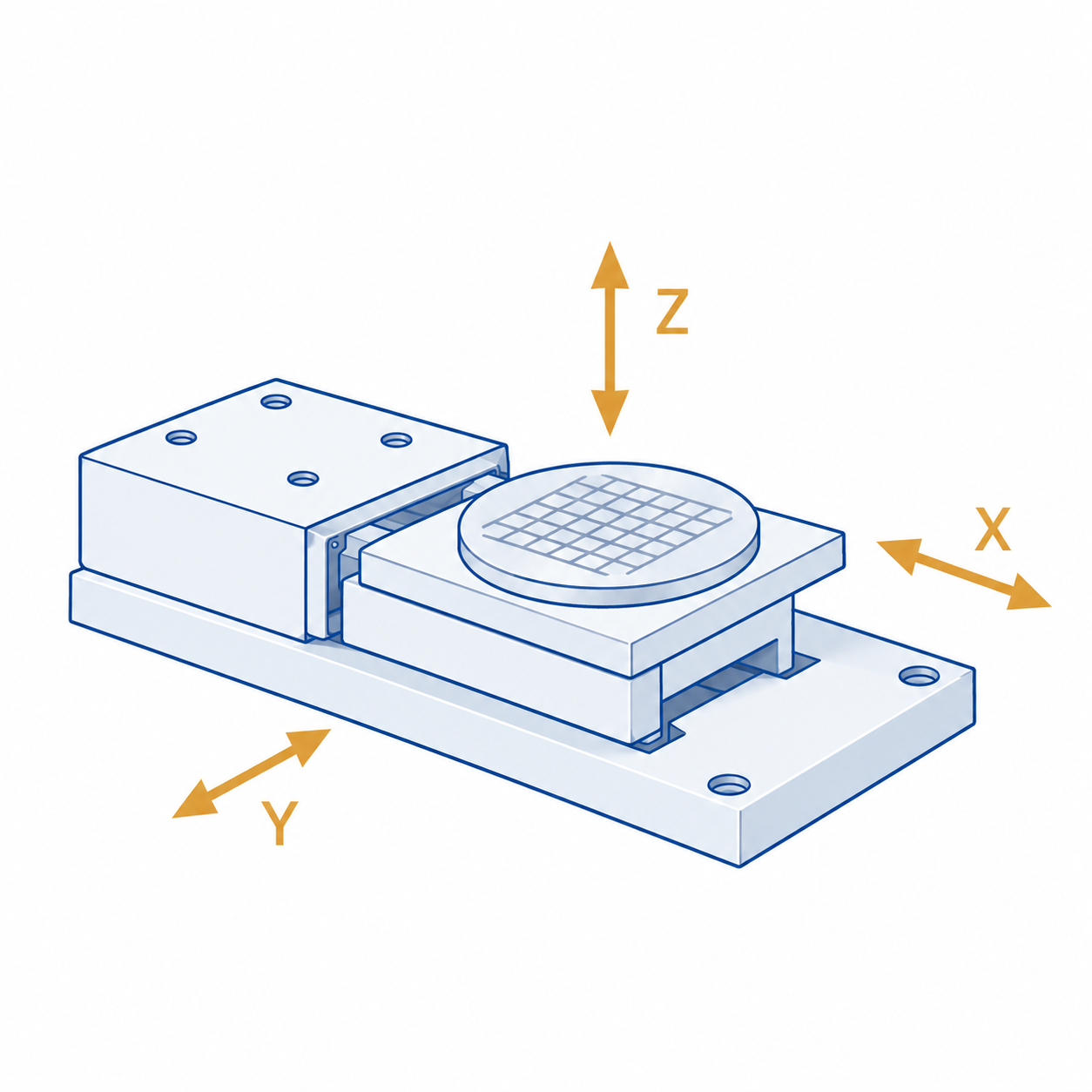
Wafer stages are a common nanopositioning application
Reluctance Actuators for Nanopositioning
Reluctance actuators combine precise motion, high force and fast dynamic response with a useful travel range. They offer the performance required for demanding nanopositioning applications, with positioning accuracy that can reach the nanometer level and potentially even the picometer level, depending on the sensors, mechanical design and control system.
Millimeter-scale stroke
Reluctance actuators provide travel from several hundred micrometers to several millimeters without sacrificing force or dynamic performance. This makes them suitable for nanopositioning applications that require a longer stroke than piezo nanopositioners can provide. Depending on the application, a single reluctance actuator may also perform both coarse and fine positioning, reducing the need for separate mechanisms.
High force density
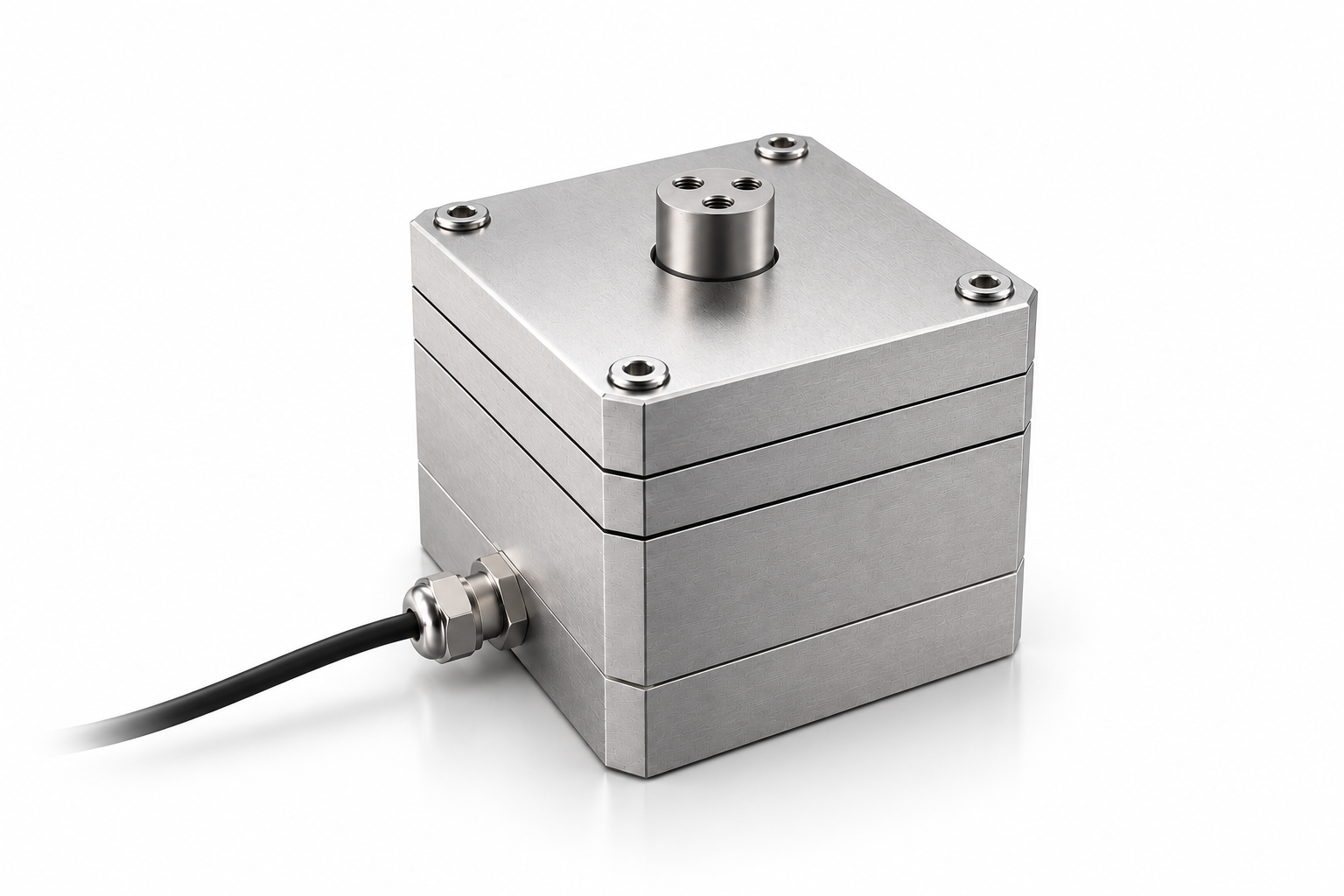
Reluctance actuators have a motor constant up to 5× higher than voice coil actuators, enabling high dynamic force from a compact actuator with relatively low electrical power requirements. This high force density is valuable in nanopositioning systems where space is limited or where substantial positioning forces are required without increasing actuator size. It can also support compact multi-axis configurations, including XY and XYZ nanopositioning stages.
Low thermal impact
Reluctance actuators require substantially less electrical power than voice coil actuators for comparable force, resulting in significantly lower heat generation. They can also provide static holding force without continuous power dissipation, eliminating heat generation while holding position.
High dynamic performance
Reluctance actuators combine useful travel with a fast electromagnetic response and mechanical resonance above 1 kHz. This enables high servo bandwidth, allowing rapid movements, precise adjustments and responsive closed-loop control.
Vacuum and cryo compatibility
Reluctance actuators are suitable for high-vacuum and cryogenic environments. Their low electrical power requirements limit heat generation, and some variants can provide static holding force without continuous power dissipation. Their contactless operation also eliminates mechanical wear and particle generation.
Conclusion
Reluctance actuators combine millimeter-scale travel, high force density, fast dynamic response and low thermal impact. They can provide nanometer-level positioning accuracy and static holding force without continuous power dissipation. This enables nanopositioners to achieve performance levels that are difficult to achieve with conventional piezo or voice coil actuators.
About Fluxthor
Fluxthor is the world's first provider of commercial reluctance actuators, with extensive experience in developing high-performance motion solutions for a wide variety of nanopositioning applications.
Contact Us
We will get in touch shortly to discuss possibilities and find a suitable solution for your application.