

Active Vibration Isolation
In precision instruments used in semiconductor manufacturing, metrology, microscopy and scientific research, even small vibrations can interfere with positioning, measurement and imaging, reducing the performance and reliability of the system. Reluctance actuators offer a promising solution for active vibration isolation, combining high force density, dynamic performance and precision with millimeter-scale travel.
To mitigate these vibrations, active vibration isolation (AVI) systems are used. Sensors detect the amplitude and frequency of the vibrations, after which one or more actuators, typically positioned underneath the machine or instrument, generate a corresponding counterforce. This way, vibrations are suppressed and the precision and reliability of the instrument is maintained.
Reluctance actuators offer a strong alternative to conventional AVI actuators, combining high force density and dynamic performance with millimeter-scale travel.
Actuators for Active Vibration Isolation
The two most commonly used actuator technologies in active vibration isolation are piezoelectric actuators and voice coil actuators.
Piezo actuators offer highly dynamic and forceful vibration compensation with excellent precision and low power consumption. However, their limited travel range can restrict the amount of disturbance that can be compensated, while their mechanical coupling to the payload can provide a path for unwanted vibration transmission.
Voice coil actuators offer a predictable, dynamic response over relatively large travel ranges and generate force without mechanical contact. However, their relatively low motor constant and force density means more power is required to generate force, resulting in greater heat generation and thermal instability.
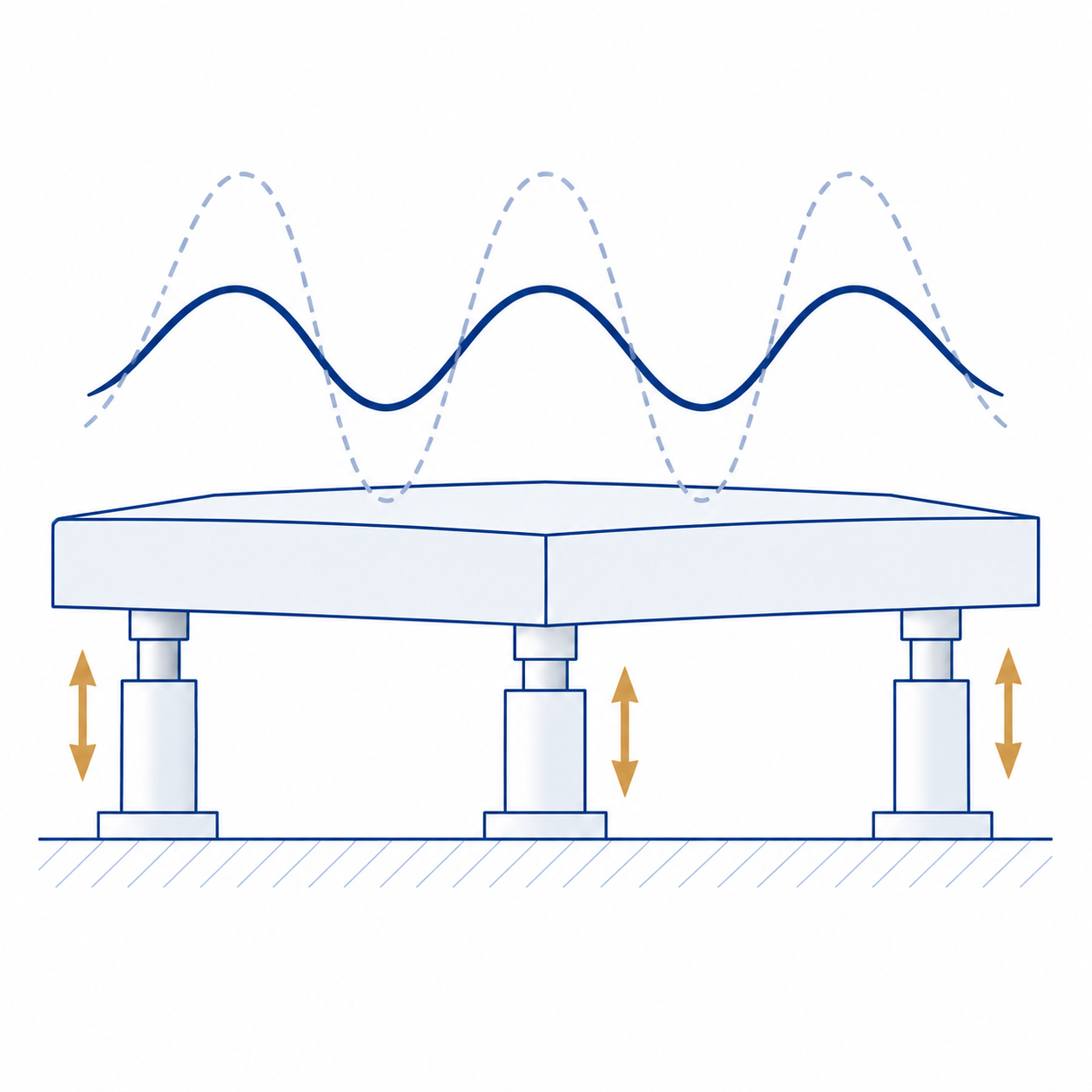
Active Vibration Isolation
These trade-offs create an opportunity for a different type of actuator: the reluctance actuator.
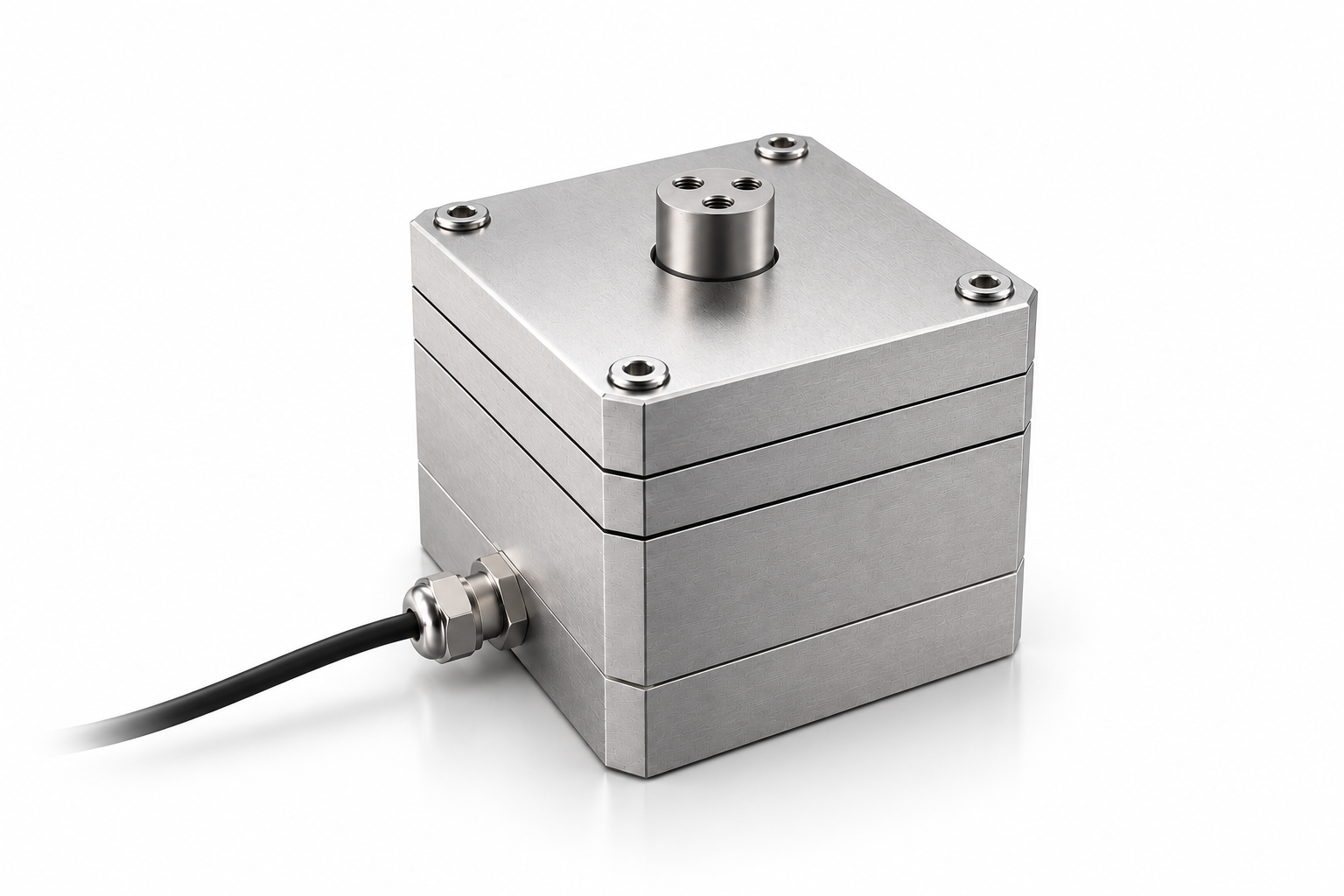
Fluxthor’s reluctance actuators combine high force, dynamic performance and precision with millimeter-scale travel and contactless force transfer. Their high force density and efficient force generation can also reduce thermal effects, enabling a combination of characteristics that is difficult to achieve with conventional active isolation technologies.
Active Vibration Control with Reluctance Actuators
Reluctance actuators provide unique benefits for active vibration isolation, including systems with up to 6 degrees of freedom (6DoF). The main advantages include:
Large travel range
Reluctance actuators can provide millimeter-scale travel while maintaining high force and dynamic performance. This allows active vibration isolation systems to compensate for larger disturbances than piezo actuators without reaching the actuator's travel limits.
High motor constant
Reluctance actuators, with a motor constant 5× higher than voice coil actuators, can generate high forces from a compact actuator with low electrical power requirements. This enables strong vibration compensation while keeping actuator size and heat generation low, which is particularly valuable in space-constrained, vacuum and cryogenic applications.
Wide isolation bandwidth
Reluctance actuators provide high isolation bandwidth, fast response and high positioning precision, allowing them to cancel disturbances across a wide frequency range. This includes very low-frequency disturbances below 0.1 Hz, as well as faster vibrations in the kilohertz-range.
Quasi-static zero heat dissipation
Fluxthor’s proprietary technology enables a single actuator to provide both static load support and dynamic vibration compensation. A permanent magnet provides the static force required to carry the payload, with virtually zero heat generation under static load conditions. Reluctance tuning then provides the dynamic force required to compensate for vibrations.
Contactless force transfer
Like voice coil actuators, reluctance actuators generate force through electromagnetism rather than through a mechanical connection between the moving and stationary parts. This avoids mechanical coupling and helps prevent unwanted vibrations from being transmitted to the isolated payload.
Conclusion
Reluctance actuators offer an attractive combination of benefits for active vibration control. As such, they provide a compelling alternative to piezoelectric and voice coil actuators for engineers looking to overcome the limitations of conventional technologies and push the performance of vibration isolation systems to the next level.
About Fluxthor
Fluxthor is the world’s first provider of commercial reluctance actuators and has extensive experience in engineering solutions for active vibration isolation platforms.
Contact Us
We will get in touch shortly to discuss possibilities and find a suitable solution for your application.